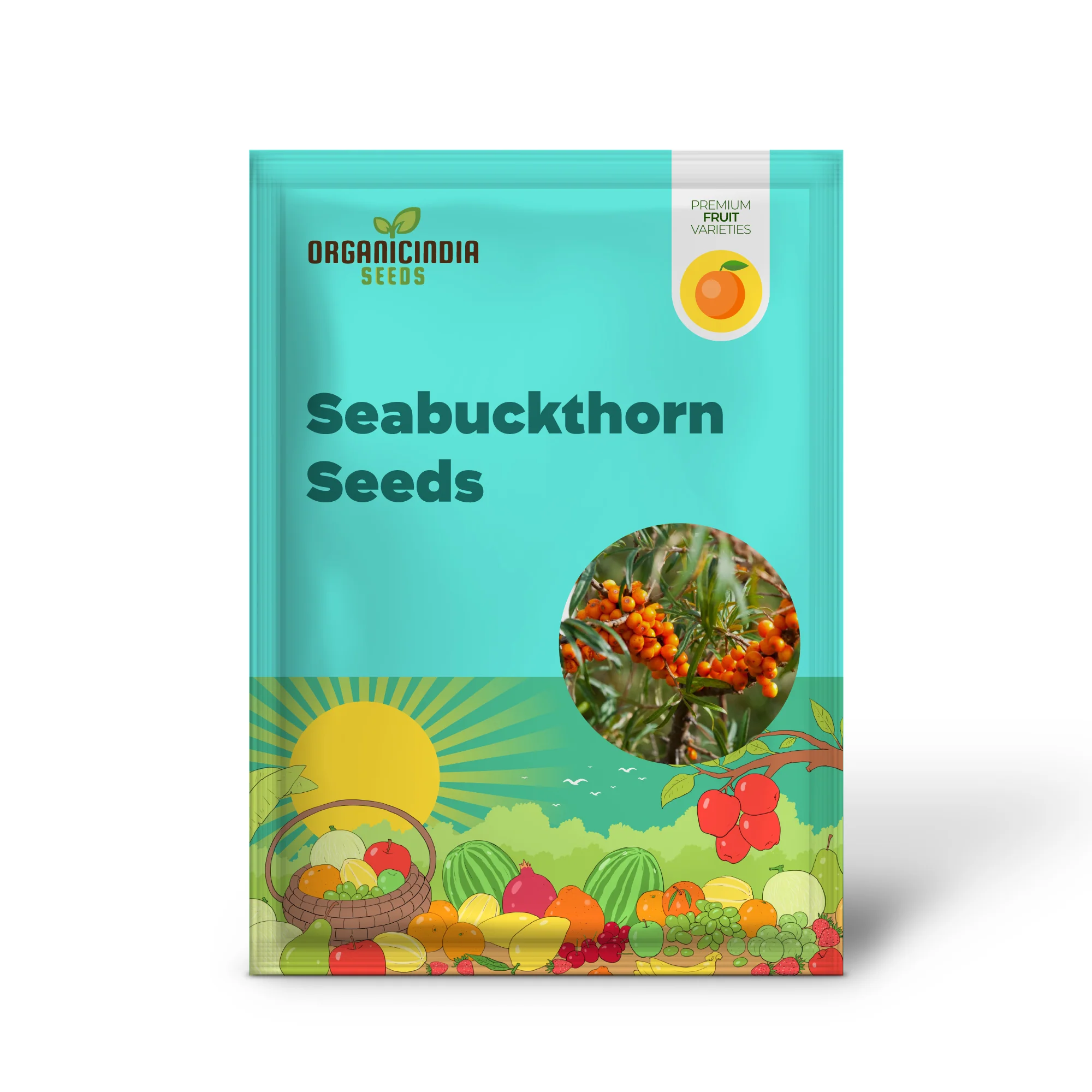
Seabuckthorn (Hippophae rhamnoides) – Seeds
Key Features:
-
Nutrient-Rich Berries: Produces bright orange berries packed with natural vitamins, antioxidants, and essential fatty acids.
-
Cold-Hardy Shrub: Tolerates harsh winters, drought, and saline soils.
-
Erosion Control Plant: Strong root system ideal for stabilizing slopes and improving soil health.
-
Non-GMO & Untreated Seeds: Naturally produced for organic gardening and sustainable landscapes.
-
Pollinator & Wildlife Friendly: Supports bees and birds with nectar and fruit.
-
Low Maintenance: Thrives with minimal care once established.
Specifications:
-
Scientific Name: Hippophae rhamnoides
-
Common Name (US): Seabuckthorn / Sea Buckthorn
-
Plant Type: Deciduous Shrub
-
Growth Height: 6–20 feet (1.8–6 m)
-
USDA Hardiness Zones: 3–7
-
Sun Exposure: Full Sun
-
Soil Type: Well-drained sandy or loamy soil; tolerates poor or saline soils
-
Water Requirements: Low to Moderate (drought-tolerant once mature)
-
Blooming Season: Spring (inconspicuous yellowish flowers)
-
Fruit Season: Late Summer to Early Fall (bright orange berries)
-
Seed Type: Non-GMO, Heirloom Quality
-
Temperature for Germination: 65–75°F (18–24°C)
-
Germination Time: 14–30 days
-
Planting Depth: ¼ inch (6 mm)
-
Spacing: 6–10 feet apart
-
Lifespan: Long-lived perennial shrub
-
Plant Gender: Dioecious (male and female plants required for fruiting)
-
Uses: Berry production, soil stabilization, hedge planting, wildlife support
Planting Guide:
-
Seed Preparation: Stratify seeds by keeping them in moist sand in the refrigerator for 3–4 weeks before planting.
-
Sowing: Sow seeds ¼ inch deep in a well-draining potting mix. Keep moist until germination.
-
Light & Temperature: Place in bright indirect sunlight at 65–75°F (18–24°C).
-
Transplanting: Move seedlings outdoors when they are 4–6 inches tall, spacing 6–10 feet apart.
-
Watering: Water regularly during early growth; reduce watering once established.
-
Soil & Fertilization: Does not require heavy fertilization; adapts to poor soils due to nitrogen-fixing roots.
-
Maintenance: Prune lightly to shape and remove dead branches.
More Images


Seabuckthorn (Hippophae rhamnoides) – Seeds
Key Features:
-
Nutrient-Rich Berries: Produces bright orange berries packed with natural vitamins, antioxidants, and essential fatty acids.
-
Cold-Hardy Shrub: Tolerates harsh winters, drought, and saline soils.
-
Erosion Control Plant: Strong root system ideal for stabilizing slopes and improving soil health.
-
Non-GMO & Untreated Seeds: Naturally produced for organic gardening and sustainable landscapes.
-
Pollinator & Wildlife Friendly: Supports bees and birds with nectar and fruit.
-
Low Maintenance: Thrives with minimal care once established.
Specifications:
-
Scientific Name: Hippophae rhamnoides
-
Common Name (US): Seabuckthorn / Sea Buckthorn
-
Plant Type: Deciduous Shrub
-
Growth Height: 6–20 feet (1.8–6 m)
-
USDA Hardiness Zones: 3–7
-
Sun Exposure: Full Sun
-
Soil Type: Well-drained sandy or loamy soil; tolerates poor or saline soils
-
Water Requirements: Low to Moderate (drought-tolerant once mature)
-
Blooming Season: Spring (inconspicuous yellowish flowers)
-
Fruit Season: Late Summer to Early Fall (bright orange berries)
-
Seed Type: Non-GMO, Heirloom Quality
-
Temperature for Germination: 65–75°F (18–24°C)
-
Germination Time: 14–30 days
-
Planting Depth: ¼ inch (6 mm)
-
Spacing: 6–10 feet apart
-
Lifespan: Long-lived perennial shrub
-
Plant Gender: Dioecious (male and female plants required for fruiting)
-
Uses: Berry production, soil stabilization, hedge planting, wildlife support
Planting Guide:
-
Seed Preparation: Stratify seeds by keeping them in moist sand in the refrigerator for 3–4 weeks before planting.
-
Sowing: Sow seeds ¼ inch deep in a well-draining potting mix. Keep moist until germination.
-
Light & Temperature: Place in bright indirect sunlight at 65–75°F (18–24°C).
-
Transplanting: Move seedlings outdoors when they are 4–6 inches tall, spacing 6–10 feet apart.
-
Watering: Water regularly during early growth; reduce watering once established.
-
Soil & Fertilization: Does not require heavy fertilization; adapts to poor soils due to nitrogen-fixing roots.
-
Maintenance: Prune lightly to shape and remove dead branches.
Product Information
Product Information
Shipping & Returns
Shipping & Returns
Description
Key Features:
-
Nutrient-Rich Berries: Produces bright orange berries packed with natural vitamins, antioxidants, and essential fatty acids.
-
Cold-Hardy Shrub: Tolerates harsh winters, drought, and saline soils.
-
Erosion Control Plant: Strong root system ideal for stabilizing slopes and improving soil health.
-
Non-GMO & Untreated Seeds: Naturally produced for organic gardening and sustainable landscapes.
-
Pollinator & Wildlife Friendly: Supports bees and birds with nectar and fruit.
-
Low Maintenance: Thrives with minimal care once established.
Specifications:
-
Scientific Name: Hippophae rhamnoides
-
Common Name (US): Seabuckthorn / Sea Buckthorn
-
Plant Type: Deciduous Shrub
-
Growth Height: 6–20 feet (1.8–6 m)
-
USDA Hardiness Zones: 3–7
-
Sun Exposure: Full Sun
-
Soil Type: Well-drained sandy or loamy soil; tolerates poor or saline soils
-
Water Requirements: Low to Moderate (drought-tolerant once mature)
-
Blooming Season: Spring (inconspicuous yellowish flowers)
-
Fruit Season: Late Summer to Early Fall (bright orange berries)
-
Seed Type: Non-GMO, Heirloom Quality
-
Temperature for Germination: 65–75°F (18–24°C)
-
Germination Time: 14–30 days
-
Planting Depth: ¼ inch (6 mm)
-
Spacing: 6–10 feet apart
-
Lifespan: Long-lived perennial shrub
-
Plant Gender: Dioecious (male and female plants required for fruiting)
-
Uses: Berry production, soil stabilization, hedge planting, wildlife support
Planting Guide:
-
Seed Preparation: Stratify seeds by keeping them in moist sand in the refrigerator for 3–4 weeks before planting.
-
Sowing: Sow seeds ¼ inch deep in a well-draining potting mix. Keep moist until germination.
-
Light & Temperature: Place in bright indirect sunlight at 65–75°F (18–24°C).
-
Transplanting: Move seedlings outdoors when they are 4–6 inches tall, spacing 6–10 feet apart.
-
Watering: Water regularly during early growth; reduce watering once established.
-
Soil & Fertilization: Does not require heavy fertilization; adapts to poor soils due to nitrogen-fixing roots.
-
Maintenance: Prune lightly to shape and remove dead branches.