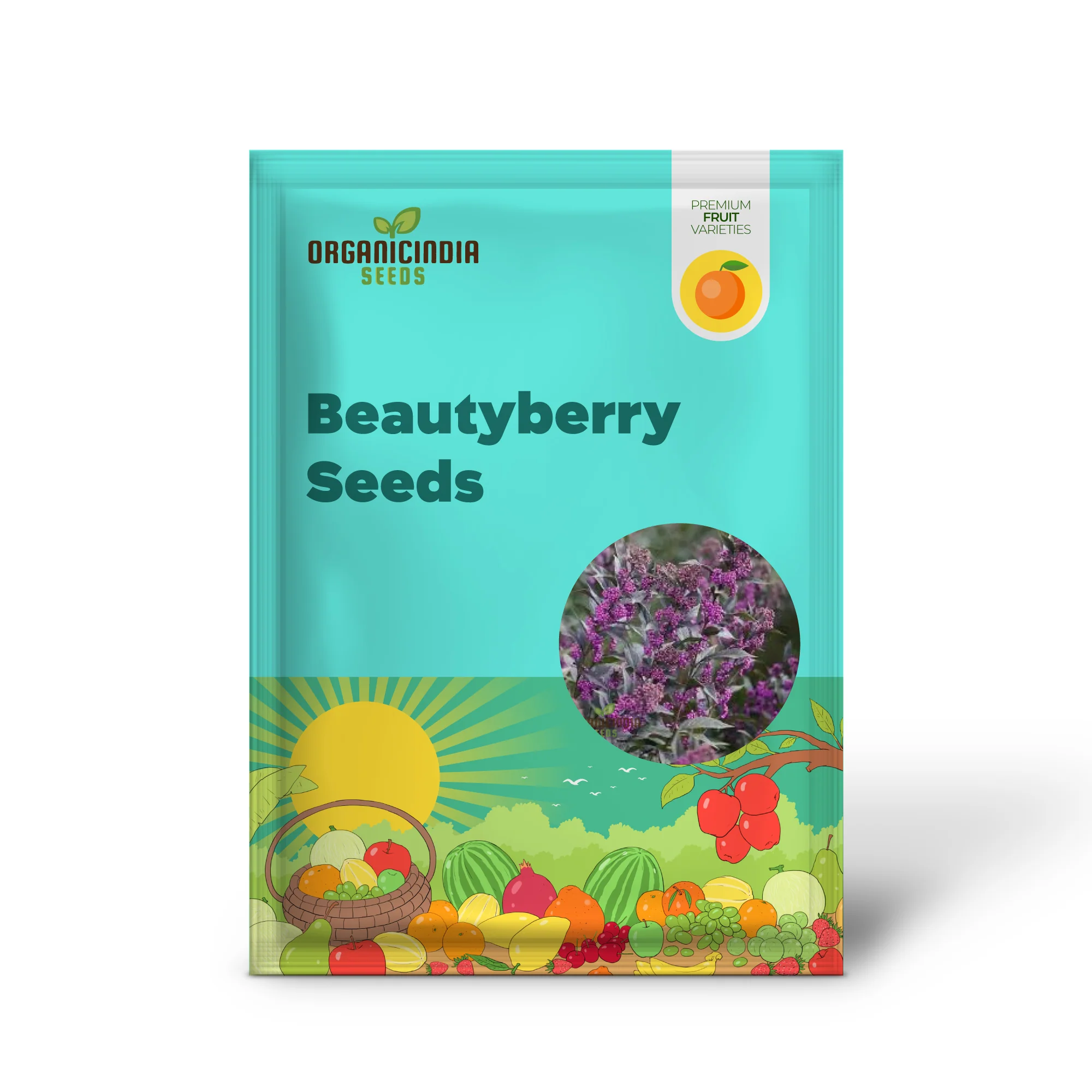
Purple Beautyberry Seeds - Callicarpa Dichotoma - Planting Guide Included
Key Features:
-
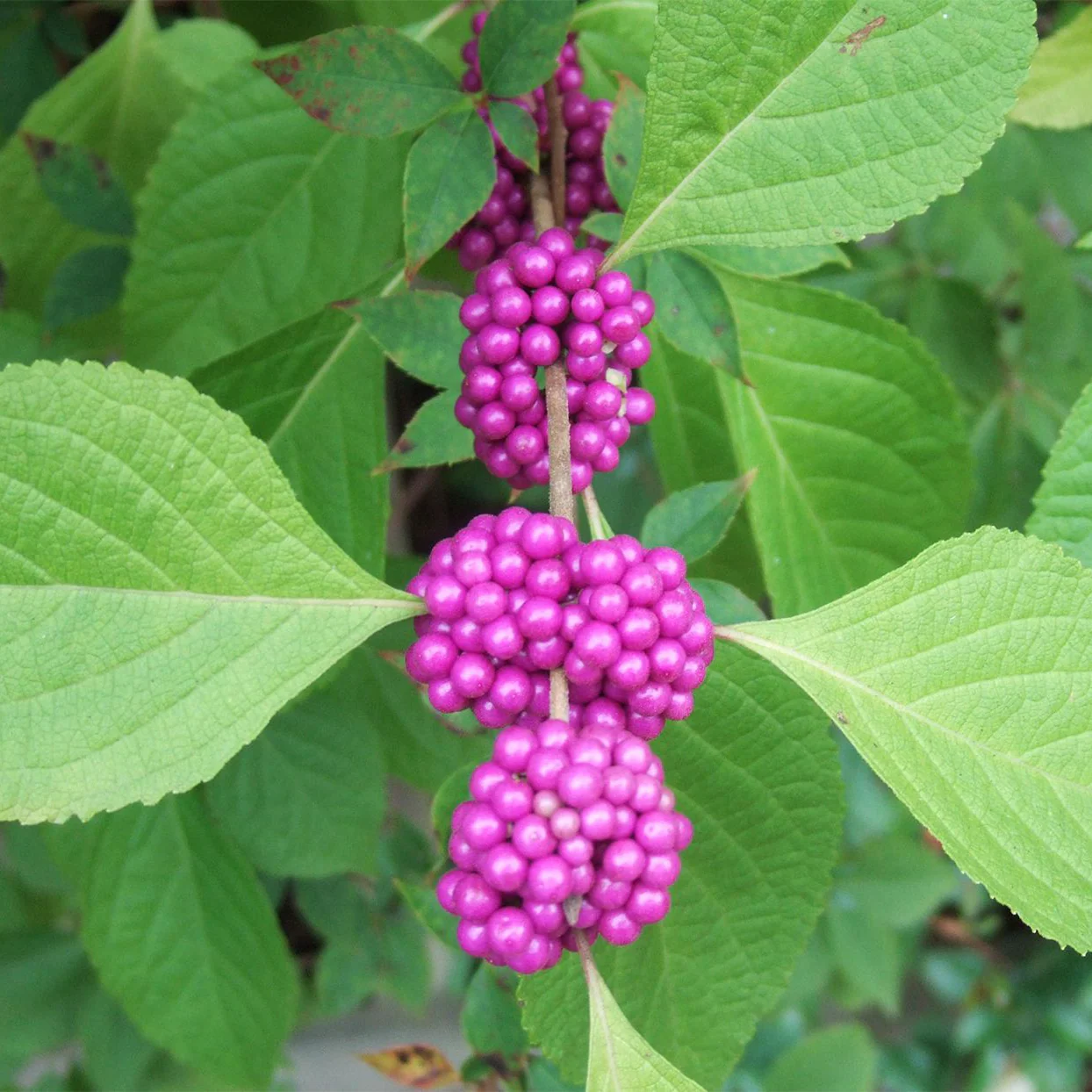
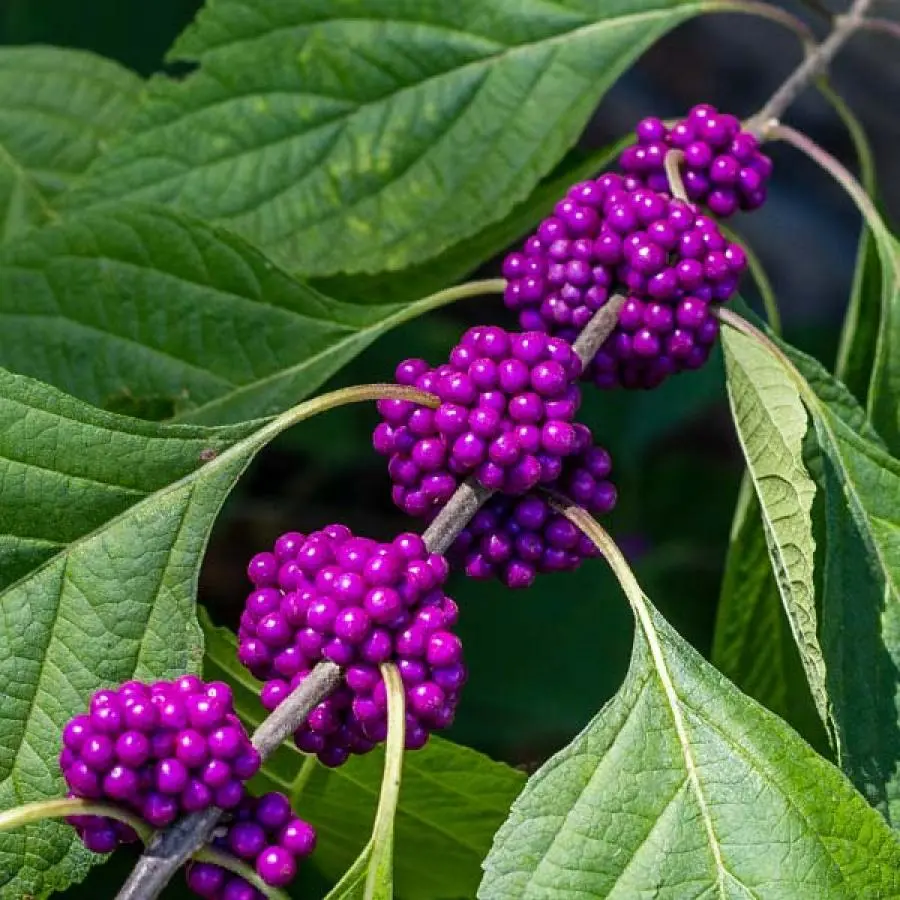
Produces striking clusters of bright purple berries in late summer to fall
-
Attractive arching branches and soft green foliage
-
Ideal for ornamental landscapes, borders, and wildlife gardens
-
Low maintenance and easy to grow in temperate climates
-
Berries provide seasonal color and attract birds
-
Non-GMO, high-quality seeds
Specifications
-
Common Name: Purple Beautyberry
-
Scientific Name: Callicarpa dichotoma
-
Plant Type: Deciduous Ornamental Shrub
-
Berry Color: Purple
-
Foliage: Light to medium green
-
Mature Height: 3–6 ft
-
Growth Habit: Rounded, compact, arching form
-
Sunlight: Full Sun to Partial Shade
-
Soil Requirements: Moist, well-draining soil
-
Watering: Moderate; keep soil evenly moist during establishment
-
USDA Hardiness Zones: 5–8
-
Bloom Time: Summer (small pink flowers)
-
Berry Season: Late Summer through Fall
-
GMO Status: Non-GMO
-
Best Planting Time: Spring or Early Fall
Planting Guide
-
Seed Preparation:
Cold stratify seeds in moist sand or peat in the refrigerator for 30–60 days. -
Sowing:
Sow seeds on the soil surface and press lightly. Do not bury deeply. -
Light:
Provide bright indirect light for germination. -
Temperature:
Keep soil consistently warm at 70–75°F. -
Transplanting:
Once seedlings are stable, transplant to pots or garden beds with space for growth. -
General Care:
Prune lightly after winter to maintain a neat shape.
Original: $16.99
-65%$16.99
$5.95More Images

Purple Beautyberry Seeds - Callicarpa Dichotoma - Planting Guide Included
Key Features:
-
Produces striking clusters of bright purple berries in late summer to fall
-
Attractive arching branches and soft green foliage
-
Ideal for ornamental landscapes, borders, and wildlife gardens
-
Low maintenance and easy to grow in temperate climates
-
Berries provide seasonal color and attract birds
-
Non-GMO, high-quality seeds
Specifications
-
Common Name: Purple Beautyberry
-
Scientific Name: Callicarpa dichotoma
-
Plant Type: Deciduous Ornamental Shrub
-
Berry Color: Purple
-
Foliage: Light to medium green
-
Mature Height: 3–6 ft
-
Growth Habit: Rounded, compact, arching form
-
Sunlight: Full Sun to Partial Shade
-
Soil Requirements: Moist, well-draining soil
-
Watering: Moderate; keep soil evenly moist during establishment
-
USDA Hardiness Zones: 5–8
-
Bloom Time: Summer (small pink flowers)
-
Berry Season: Late Summer through Fall
-
GMO Status: Non-GMO
-
Best Planting Time: Spring or Early Fall
Planting Guide
-
Seed Preparation:
Cold stratify seeds in moist sand or peat in the refrigerator for 30–60 days. -
Sowing:
Sow seeds on the soil surface and press lightly. Do not bury deeply. -
Light:
Provide bright indirect light for germination. -
Temperature:
Keep soil consistently warm at 70–75°F. -
Transplanting:
Once seedlings are stable, transplant to pots or garden beds with space for growth. -
General Care:
Prune lightly after winter to maintain a neat shape.
Product Information
Product Information
Shipping & Returns
Shipping & Returns
Description
Key Features:
-
Produces striking clusters of bright purple berries in late summer to fall
-
Attractive arching branches and soft green foliage
-
Ideal for ornamental landscapes, borders, and wildlife gardens
-
Low maintenance and easy to grow in temperate climates
-
Berries provide seasonal color and attract birds
-
Non-GMO, high-quality seeds
Specifications
-
Common Name: Purple Beautyberry
-
Scientific Name: Callicarpa dichotoma
-
Plant Type: Deciduous Ornamental Shrub
-
Berry Color: Purple
-
Foliage: Light to medium green
-
Mature Height: 3–6 ft
-
Growth Habit: Rounded, compact, arching form
-
Sunlight: Full Sun to Partial Shade
-
Soil Requirements: Moist, well-draining soil
-
Watering: Moderate; keep soil evenly moist during establishment
-
USDA Hardiness Zones: 5–8
-
Bloom Time: Summer (small pink flowers)
-
Berry Season: Late Summer through Fall
-
GMO Status: Non-GMO
-
Best Planting Time: Spring or Early Fall
Planting Guide
-
Seed Preparation:
Cold stratify seeds in moist sand or peat in the refrigerator for 30–60 days. -
Sowing:
Sow seeds on the soil surface and press lightly. Do not bury deeply. -
Light:
Provide bright indirect light for germination. -
Temperature:
Keep soil consistently warm at 70–75°F. -
Transplanting:
Once seedlings are stable, transplant to pots or garden beds with space for growth. -
General Care:
Prune lightly after winter to maintain a neat shape.