Codonopsis Lanceolata Flower Seeds for Planting, Premium Quality for Gardening
Codonopsis lanceolata – Unique Climbing Perennial with Bell-Shaped Blooms
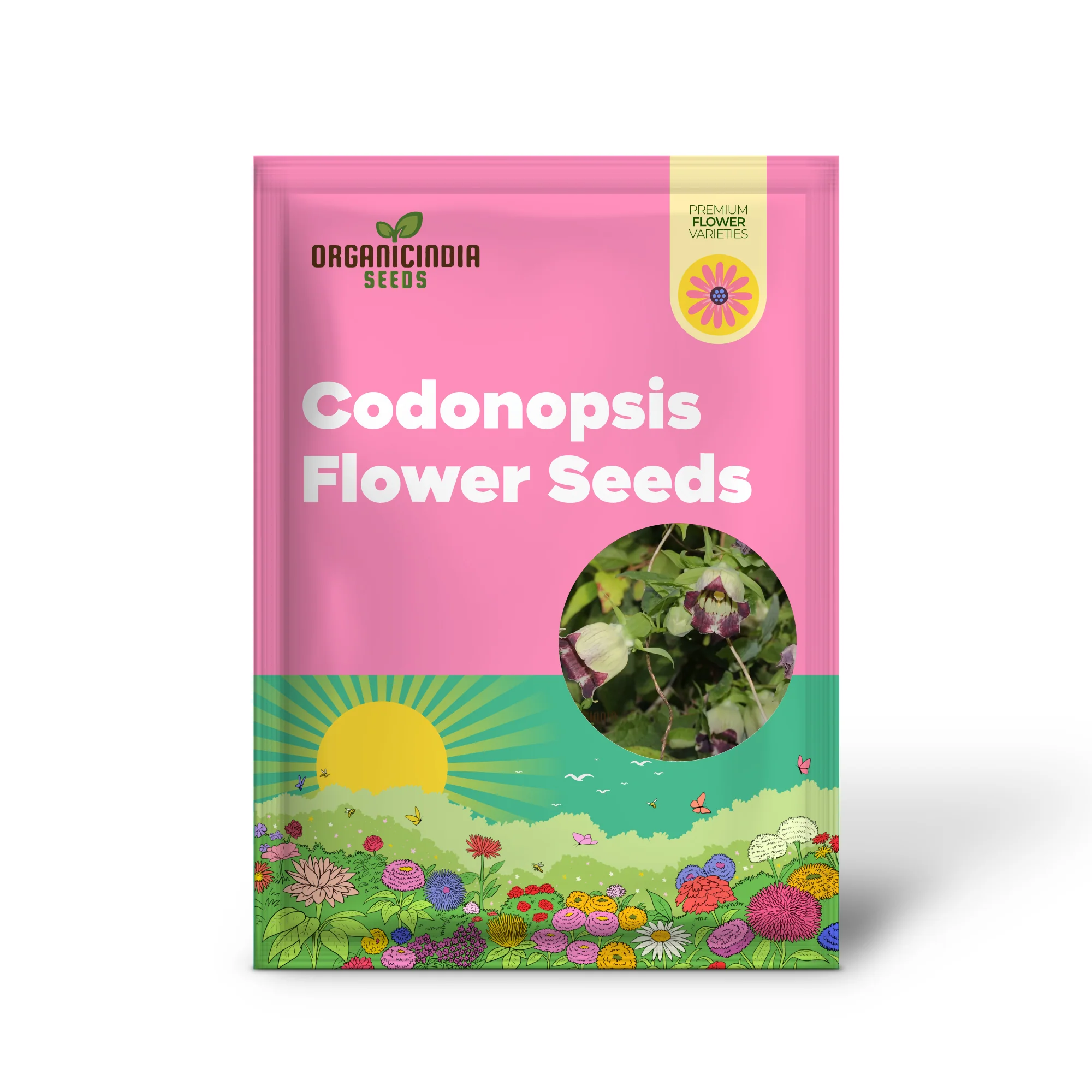
Add a touch of graceful beauty and medicinal value to your garden with Codonopsis lanceolata, also known as Bonnet Bellflower or Poor Man’s Ginseng. This climbing perennial produces delicate, bell-shaped, pale green to bluish-purple flowers with intricate veining, creating an enchanting display from late summer to early fall. Its slender vines weave beautifully through trellises, fences, or naturalized garden settings, making it an excellent choice for vertical interest. Additionally, its edible roots are valued in traditional herbal medicine, adding to its appeal for both gardeners and herbalists.
Key Features
- Scientific Name: Codonopsis lanceolata
- Common Names: Bonnet Bellflower, Poor Man’s Ginseng
- Plant Type: Perennial climber
- Flower Color: Pale green to bluish-purple with veined patterns
- Mature Height: 6 to 10 feet (with support)
- Spread: 12 to 24 inches
- Growth Habit: Twining, climbing
- Light Requirements: Full sun to partial shade
- Soil Requirements: Well-drained, loamy soil (neutral to slightly acidic pH)
- Watering Needs: Moderate; prefers consistently moist but well-drained soil
- Blooming Season: Late summer to early fall
- Uses: Trellises, fences, naturalized gardens, medicinal gardens
Why Grow Codonopsis lanceolata?
- Unique & Ornamental – Elegant, hanging bell-shaped flowers add delicate charm to vertical spaces.
- Hardy & Perennial – Returns each year with minimal maintenance.
- Climbing Habit – Perfect for trellises, pergolas, and fences, adding vertical interest.
- Medicinal & Edible Uses – Roots are used in traditional herbal remedies, similar to ginseng.
- Attracts Pollinators – Beneficial for bees and other pollinating insects.
How to Grow Codonopsis lanceolata from Seeds
Seed Sowing Instructions
- Best Time to Sow: Fall to early spring
- Pre-Treatment:
- Cold stratification (4-6 weeks) can enhance germination. Store seeds in a moist paper towel inside the refrigerator before sowing.
- Sowing Method:
- Start seeds indoors in seed trays or direct sow outdoors in early spring.
- Sprinkle seeds lightly on the soil surface and press gently—do not bury deeply, as light aids germination.
- Germination Conditions:
- Soil Temperature: 60-70°F (15-21°C)
- Germination Time: 3-6 weeks
Care and Maintenance
- Watering: Keep soil evenly moist but not waterlogged.
- Fertilization: Apply a balanced, organic fertilizer in early spring to promote healthy growth.
- Support: Provide trellises or stakes for the vines to climb.
- Pruning: Trim back dead or unruly growth to encourage bushier development.
- Winter Care: In colder climates, apply mulch around the base to protect the roots.
Companion Planting Suggestions
- Pairs beautifully with Clematis, Honeysuckle, or Climbing Roses for a layered effect.
- Complements Ferns, Hostas, and Astilbe in shaded garden settings.
- Works well alongside medicinal herbs like Ginseng, Astragalus, and Valerian.
Introduce the Elegance and Versatility of Codonopsis lanceolata to Your Garden
Whether grown for its ornamental appeal, climbing ability, or traditional herbal uses, Codonopsis lanceolata is a unique and rewarding addition to any garden. With its delicate bell flowers, resilient nature, and pollinator-friendly blooms, this perennial climber is sure to bring charm and functionality to your space.
More Images


Codonopsis Lanceolata Flower Seeds for Planting, Premium Quality for Gardening
Codonopsis lanceolata – Unique Climbing Perennial with Bell-Shaped Blooms
Add a touch of graceful beauty and medicinal value to your garden with Codonopsis lanceolata, also known as Bonnet Bellflower or Poor Man’s Ginseng. This climbing perennial produces delicate, bell-shaped, pale green to bluish-purple flowers with intricate veining, creating an enchanting display from late summer to early fall. Its slender vines weave beautifully through trellises, fences, or naturalized garden settings, making it an excellent choice for vertical interest. Additionally, its edible roots are valued in traditional herbal medicine, adding to its appeal for both gardeners and herbalists.
Key Features
- Scientific Name: Codonopsis lanceolata
- Common Names: Bonnet Bellflower, Poor Man’s Ginseng
- Plant Type: Perennial climber
- Flower Color: Pale green to bluish-purple with veined patterns
- Mature Height: 6 to 10 feet (with support)
- Spread: 12 to 24 inches
- Growth Habit: Twining, climbing
- Light Requirements: Full sun to partial shade
- Soil Requirements: Well-drained, loamy soil (neutral to slightly acidic pH)
- Watering Needs: Moderate; prefers consistently moist but well-drained soil
- Blooming Season: Late summer to early fall
- Uses: Trellises, fences, naturalized gardens, medicinal gardens
Why Grow Codonopsis lanceolata?
- Unique & Ornamental – Elegant, hanging bell-shaped flowers add delicate charm to vertical spaces.
- Hardy & Perennial – Returns each year with minimal maintenance.
- Climbing Habit – Perfect for trellises, pergolas, and fences, adding vertical interest.
- Medicinal & Edible Uses – Roots are used in traditional herbal remedies, similar to ginseng.
- Attracts Pollinators – Beneficial for bees and other pollinating insects.
How to Grow Codonopsis lanceolata from Seeds
Seed Sowing Instructions
- Best Time to Sow: Fall to early spring
- Pre-Treatment:
- Cold stratification (4-6 weeks) can enhance germination. Store seeds in a moist paper towel inside the refrigerator before sowing.
- Sowing Method:
- Start seeds indoors in seed trays or direct sow outdoors in early spring.
- Sprinkle seeds lightly on the soil surface and press gently—do not bury deeply, as light aids germination.
- Germination Conditions:
- Soil Temperature: 60-70°F (15-21°C)
- Germination Time: 3-6 weeks
Care and Maintenance
- Watering: Keep soil evenly moist but not waterlogged.
- Fertilization: Apply a balanced, organic fertilizer in early spring to promote healthy growth.
- Support: Provide trellises or stakes for the vines to climb.
- Pruning: Trim back dead or unruly growth to encourage bushier development.
- Winter Care: In colder climates, apply mulch around the base to protect the roots.
Companion Planting Suggestions
- Pairs beautifully with Clematis, Honeysuckle, or Climbing Roses for a layered effect.
- Complements Ferns, Hostas, and Astilbe in shaded garden settings.
- Works well alongside medicinal herbs like Ginseng, Astragalus, and Valerian.
Introduce the Elegance and Versatility of Codonopsis lanceolata to Your Garden
Whether grown for its ornamental appeal, climbing ability, or traditional herbal uses, Codonopsis lanceolata is a unique and rewarding addition to any garden. With its delicate bell flowers, resilient nature, and pollinator-friendly blooms, this perennial climber is sure to bring charm and functionality to your space.
Product Information
Product Information
Shipping & Returns
Shipping & Returns
Description
Codonopsis lanceolata – Unique Climbing Perennial with Bell-Shaped Blooms
Add a touch of graceful beauty and medicinal value to your garden with Codonopsis lanceolata, also known as Bonnet Bellflower or Poor Man’s Ginseng. This climbing perennial produces delicate, bell-shaped, pale green to bluish-purple flowers with intricate veining, creating an enchanting display from late summer to early fall. Its slender vines weave beautifully through trellises, fences, or naturalized garden settings, making it an excellent choice for vertical interest. Additionally, its edible roots are valued in traditional herbal medicine, adding to its appeal for both gardeners and herbalists.
Key Features
- Scientific Name: Codonopsis lanceolata
- Common Names: Bonnet Bellflower, Poor Man’s Ginseng
- Plant Type: Perennial climber
- Flower Color: Pale green to bluish-purple with veined patterns
- Mature Height: 6 to 10 feet (with support)
- Spread: 12 to 24 inches
- Growth Habit: Twining, climbing
- Light Requirements: Full sun to partial shade
- Soil Requirements: Well-drained, loamy soil (neutral to slightly acidic pH)
- Watering Needs: Moderate; prefers consistently moist but well-drained soil
- Blooming Season: Late summer to early fall
- Uses: Trellises, fences, naturalized gardens, medicinal gardens
Why Grow Codonopsis lanceolata?
- Unique & Ornamental – Elegant, hanging bell-shaped flowers add delicate charm to vertical spaces.
- Hardy & Perennial – Returns each year with minimal maintenance.
- Climbing Habit – Perfect for trellises, pergolas, and fences, adding vertical interest.
- Medicinal & Edible Uses – Roots are used in traditional herbal remedies, similar to ginseng.
- Attracts Pollinators – Beneficial for bees and other pollinating insects.
How to Grow Codonopsis lanceolata from Seeds
Seed Sowing Instructions
- Best Time to Sow: Fall to early spring
- Pre-Treatment:
- Cold stratification (4-6 weeks) can enhance germination. Store seeds in a moist paper towel inside the refrigerator before sowing.
- Sowing Method:
- Start seeds indoors in seed trays or direct sow outdoors in early spring.
- Sprinkle seeds lightly on the soil surface and press gently—do not bury deeply, as light aids germination.
- Germination Conditions:
- Soil Temperature: 60-70°F (15-21°C)
- Germination Time: 3-6 weeks
Care and Maintenance
- Watering: Keep soil evenly moist but not waterlogged.
- Fertilization: Apply a balanced, organic fertilizer in early spring to promote healthy growth.
- Support: Provide trellises or stakes for the vines to climb.
- Pruning: Trim back dead or unruly growth to encourage bushier development.
- Winter Care: In colder climates, apply mulch around the base to protect the roots.
Companion Planting Suggestions
- Pairs beautifully with Clematis, Honeysuckle, or Climbing Roses for a layered effect.
- Complements Ferns, Hostas, and Astilbe in shaded garden settings.
- Works well alongside medicinal herbs like Ginseng, Astragalus, and Valerian.
Introduce the Elegance and Versatility of Codonopsis lanceolata to Your Garden
Whether grown for its ornamental appeal, climbing ability, or traditional herbal uses, Codonopsis lanceolata is a unique and rewarding addition to any garden. With its delicate bell flowers, resilient nature, and pollinator-friendly blooms, this perennial climber is sure to bring charm and functionality to your space.